 Skip to content
How to Choose the Right Bus Air Conditioning System: A Practical Guide for Fleet Operators, OEMs, and Bus Body Builders
Introduction
Selecting the right bus air conditioning system is one of the most consequential decisions a fleet operator, OEM, or bus body builder can make. Get it right, and you secure years of dependable passenger comfort, lower fuel or energy costs, and a reduced maintenance burden. Get it wrong, and you face persistent breakdowns, unhappy passengers, and a total cost of ownership far higher than your initial projection.
With India’s bus fleet expanding rapidly – accelerated by the Government of India’s PM E-Drive scheme, which awarded 10,900 electric buses in December 2025 alone – the demand for purpose-engineered, climate-appropriate air conditioning solutions has never been greater. Meanwhile, the global bus HVAC market is undergoing a structural shift: Asia-Pacific, driven substantially by India and China, now accounts for nearly 45 per cent of global bus HVAC revenue, according to market research published in 2025 by Valuates Reports.
Yet despite this scale, choosing the right system remains a technically complex decision. Bus types vary enormously. Climatic conditions across India range from the temperate north to the humid tropics of the south and the high-ambient desert heat of the west. Powertrain options now span diesel, CNG, hybrid, and fully electric platforms. And cooling capacity standards, while referenced by bodies such as the Society of Automotive Engineers (SAE), are not yet universally harmonised across all markets.
This guide provides a structured, factual framework to help decision-makers evaluate bus air conditioning systems with clarity and confidence.
What Is a Bus Air Conditioning System and Why Does It Matter?
A bus air conditioning system is an integrated assembly of components – compressor, condenser, evaporator, expansion valve, refrigerant circuit, fans, and electronic controls – designed to cool, dehumidify, and ventilate the interior of a passenger bus. Unlike a domestic split air conditioner designed to cool a static residential space, a bus AC system must operate under continuous vibration, variable engine speeds (or variable electrical loads on EVs), extreme ambient temperatures, frequent door openings, and fluctuating passenger densities – all simultaneously.
The performance stakes are high. In India, where summer ambient temperatures in several states regularly exceed 45 degrees Celsius, a sub-standard or under-specified system cannot maintain acceptable cabin temperatures. The consequences extend beyond passenger discomfort: heat stress in enclosed cabins is a documented health risk, and unreliable thermal conditions in school buses carry particular safety implications for children.
From an operator’s perspective, the AC system is also one of the most significant contributors to fuel or energy consumption in a bus fleet. An inefficiently specified or poorly maintained system can consume an additional 10 to 15 per cent of engine power on a diesel bus, directly affecting fuel economy and operational costs. On an electric bus, the HVAC system’s energy demand directly reduces the vehicle’s available driving range – making the specification decision even more financially consequential.
Types of Bus Air Conditioning Systems
Understanding the fundamental system types available is the essential first step in the selection process.
Engine-Driven (Belt-Drive) Systems
These are the most widely deployed systems on diesel and CNG buses globally. The compressor is mechanically coupled to the vehicle’s engine via a belt and electromagnetic clutch. When the driver engages the AC, the clutch locks in and the engine drives the compressor directly.
Advantages: Proven technology, lower capital cost compared to independent systems, relatively straightforward maintenance, and broad availability of technicians and spare parts.
Limitations: Cooling output is directly tied to engine speed. When the bus is stationary – at a bus stop, in traffic, or while loading – cooling performance may degrade. The AC load also represents a parasitic drain on engine power, which affects fuel efficiency and vehicle performance, particularly on graded roads or during acceleration.
All-Electric (Electrically Driven) Systems
In an all-electric bus AC system, the compressor is driven by an electric motor powered by the vehicle’s high-voltage battery pack or an auxiliary power source, completely independent of the main engine or drivetrain. This architecture is standard for battery electric buses (BEVs) and is increasingly specified for plug-in hybrid and CNG buses where energy management is a priority.
Advantages: Cooling performance is consistent regardless of vehicle speed or engine state. The system can operate while the vehicle is stationary without idling the engine. Precise electronic control enables better energy management and temperature regulation.
Limitations: Higher capital cost than engine-driven systems. The AC system draws directly from the battery, which affects driving range. In the Indian context, where electric bus ranges currently span 160 to 300-plus kilometres depending on the model, thermal load optimisation in the HVAC system design is critical.
Independent Sub-Engine Systems
A small, dedicated internal combustion engine – separate from the main vehicle powertrain – drives the air conditioning compressor. This configuration is found in high-specification coaches and long-distance intercity vehicles where continuous, high-volume cooling is required independent of vehicle speed.
Advantages: Maximum cooling capacity, fully independent of main engine state, capable of maintaining cabin temperature during extended stops.
Limitations: Highest capital cost, increased mechanical complexity, additional maintenance requirements, added vehicle weight, and additional fuel consumption from the sub-engine.
For the vast majority of city buses, intercity coaches, school buses, and electric buses, the selection is between engine-driven systems (diesel and CNG) and all-electric systems (BEVs). The sub-engine configuration is typically reserved for premium long-distance coaches with specific operational requirements.
Key Factors to Consider When Choosing a Bus Air Conditioning System
Bus Type and Application Category
The first – and arguably most decisive – factor is the category of bus and its specific operational use case. A city bus operating on a dense urban route with frequent door openings has fundamentally different thermal dynamics from a long-distance sleeper coach or a school bus running a rural feeder route.
Consider the following primary application categories:
City and Intra-City Transit Buses: Frequent stops, high passenger turnover, variable passenger density. Priority is on rapid pull-down performance and consistent air distribution throughout the saloon. Units with multiple evaporator units and zoned distribution ducting are typically preferable.
Intercity and Long-Distance Coaches: Sustained cruise-speed operation, sealed cabins for extended periods, premium passenger expectations. Priority is on consistent temperature maintenance, low cabin noise levels, and energy efficiency over long duty cycles.
School Buses: Safety is the primary criterion. Systems must deliver dependable pull-down performance quickly after the vehicle is loaded with students, particularly in peak summer conditions. Regulatory guidance in India recommends that school bus AC systems are capable of maintaining cabin temperatures at safe, comfortable levels under maximum passenger load.
Sleeper Coaches: Thermal comfort during overnight operation, often with minimal external ambient temperature differential. Lower cooling demand but higher air quality expectations (fresh air exchange, filtration).
Electric Buses: Powertrain-integrated systems where HVAC energy consumption must be balanced against driving range. Heat pump architectures – which provide both cooling and heating from a single reversible circuit – are increasingly deployed in electric bus applications.
Staff Buses and Institutional Shuttles: Medium-duty cycles, typically defined routes. Emphasis on reliability and low maintenance frequency.
Bus Size and Passenger Capacity
Cooling capacity requirements scale directly with the internal volume of the bus and its maximum occupant load. Bus length is the primary proxy for internal volume, and the industry commonly uses the following size categories:
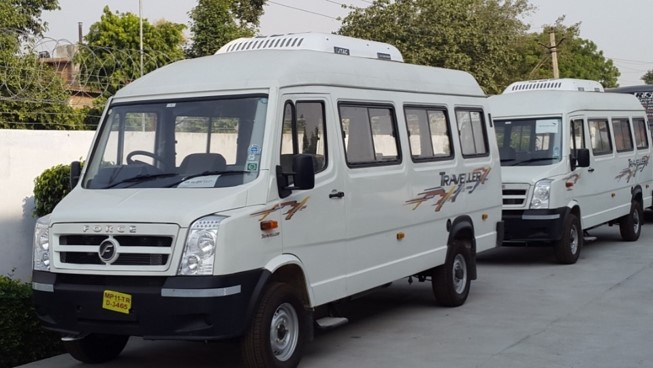
Mini Buses and Vans (up to 7 metres): Feeder routes, school transport, Force Traveller conversions. Cooling capacity range: approximately 10 kW to 18 kW.
Midi Buses (7 to 9 metres): Mid-size city routes, intercity feeders, tourism. Cooling capacity range: approximately 18 kW to 28 kW.
Standard Full-Size Buses (10 to 12 metres): City transit, intercity express, school buses. Cooling capacity range: approximately 28 kW to 42 kW.
Large and Premium Coaches (12 to 15 metres, including double-deckers): Long-distance, sleeper, articulated city BRT. Cooling capacity range: approximately 35 kW to 65 kW, depending on specification.
These ranges are indicative. Actual specification must account for the number of seated and standing passengers, internal heat generation (body heat, lighting, electronic displays), glass area and window type, insulation quality of the body shell, and the ambient temperature profile of the operating region.
Climate and Operating Environment
India’s climatic diversity demands that bus air conditioning systems be specified for local ambient conditions, not generic benchmarks. A system calibrated for a temperate European environment will be systematically under-performing when deployed on a city route in Rajasthan or Tamil Nadu.
The following climate-specific considerations are critical:
High Ambient Temperature Zones (above 42 degrees Celsius): Jaipur, Ahmedabad, Nagpur, Hyderabad, Lucknow in summer. Systems must be rated for operation at elevated ambient condensing temperatures. Standard BTU ratings measured at 35 degrees Celsius ambient are insufficient for specification in these zones. Specify pull-down performance at 45 to 48 degrees Celsius ambient.
High Humidity Coastal and Sub-Tropical Zones: Chennai, Mumbai, Kochi, Kolkata. The system must demonstrate strong dehumidification performance in addition to cooling. Latent heat removal capacity is as important as sensible cooling capacity in these environments.
High Altitude Regions: Himachal Pradesh, Uttarakhand, the North-East. Reduced air density affects condenser performance. Systems operating at altitude above 1,000 metres should be evaluated for de-rated performance under reduced ambient pressure.
Energy Efficiency and Total Cost of Ownership (TCO)
The acquisition price of a bus air conditioning unit represents only one element of the true procurement cost. Over the operational life of a bus – typically 8 to 12 years – maintenance costs, fuel or energy consumption attributable to the AC system, spare parts expenditure, and service downtime can collectively exceed the upfront capital cost of the unit.
Industry analyses published in 2025 indicate that electric buses achieve 15 to 20 per cent lower per-kilometre operating costs versus equivalent AC diesel alternatives over a 12-year lifecycle, driven in part by the energy efficiency of modern all-electric HVAC systems compared to engine-driven alternatives.
When evaluating TCO, fleet operators and procurement teams should consider:
The system’s Coefficient of Performance (COP) – a measure of cooling output relative to energy input. A higher COP means lower energy consumption for the same cooling performance.
Maintenance intervals and consumable costs (refrigerant recharge, belt replacement, filter service).
Mean Time Between Failures (MTBF) for key components, particularly the compressor, which is the most capital-intensive replaceable component.
Warranty coverage terms and after-sales service availability.
Availability of a nationwide service network to ensure that breakdowns do not result in extended vehicle downtime.
Compliance With Industry Performance Standards
Selecting a system whose performance has been validated against recognised industry standards is essential for fleet operators who procure for government transport undertakings, school boards, or regulated public transit networks. The most widely referenced performance benchmarks are:
SAE (Society of Automotive Engineers) BTU/hour measurement protocols, which provide a standardised basis for comparing cooling capacity across different systems and suppliers.
Pull-Down Test Performance: The most reliable real-world validation method – this test measures how rapidly an installed system can reduce cabin temperature under defined ambient and passenger-load conditions. The American Public Transit Association (APTA) specifies that systems should be capable of reducing the passenger compartment temperature from 60 degrees Celsius (115 degrees Fahrenheit) to 35 degrees Celsius (95 degrees Fahrenheit) within 20 minutes of system engagement – a benchmark that is also practically relevant to Indian tropical and semi-arid operating conditions.
Always request documentation of pull-down test results from suppliers. This is the single most credible performance evidence available.
After-Sales Support and Spare Parts Availability
A bus air conditioning system that cannot be serviced promptly – whether due to lack of technician proximity, spare parts availability, or technical documentation gaps – represents an operational liability. For fleet operators running large numbers of buses across multiple depots or routes, this is a critical procurement criterion.
Key questions for supplier evaluation include:
How many service touchpoints does the supplier operate within your operating geography?
What is the average response time for a breakdown call?
Is 24/7 support available, particularly during peak summer operational months when AC system demand is highest?
Are trained technicians available at the depot or city level, or does every service event require escalation to a central facility?
Is there a structured preventive maintenance programme to reduce the likelihood of in-service failures?
Understanding Cooling Capacity: BTU and kW Explained
Cooling capacity is the single most-cited technical specification in bus AC procurement, yet it is also the most frequently misunderstood and inconsistently reported.
BTU (British Thermal Unit) per hour is an imperial measure of cooling power – the quantity of heat that the system can remove from the cabin in one hour. In the global bus AC industry, this is often still quoted in BTU/hour, while the metric equivalent – kilowatts (kW) – is the standard reference in India, Europe, and most of Asia. The conversion is: 1 kW of cooling capacity equals approximately 3,412 BTU/hour.
There is currently no single universal standard for how bus AC manufacturers must measure and report BTU or kW capacity. This absence of a universal standard means that the same nominal BTU figure from two different suppliers may reflect materially different testing conditions – ambient temperature, refrigerant charge, condenser airflow, and engine or motor speed all affect measured output.
The industry convention for stating capacity is typically Gross Capacity – which is defined as the lowest of the three major component ratings: compressor capacity, condenser capacity, and evaporator capacity. The weakest link in the circuit determines the overall system capacity. This is an important distinction when comparing supplier datasheets.
The practical implication: always require a pull-down test result, not just a nameplate BTU figure. The pull-down test – conducted with the actual system installed in the actual vehicle, under defined ambient and passenger-load conditions – is the only meaningful measure of real-world performance.
Choosing a Bus Air Conditioning System for Electric Vehicles
How Electric Bus AC Systems Differ From Diesel Bus Systems
The transition from diesel and CNG buses to battery electric buses (BEVs) requires a fundamental re-evaluation of air conditioning system architecture. Engine-driven systems – the dominant technology on fossil-fuelled buses – cannot be directly transferred to a BEV platform, because there is no running internal combustion engine to drive the compressor.
On an electric bus, the air conditioning compressor is powered by an electric motor, drawing from the vehicle’s high-voltage traction battery. This has two principal implications:
First, the AC system must be precisely energy-managed. Unlike a diesel bus – where the driver can always run the AC at full capacity with the engine running – an electric bus operator must balance thermal comfort against available battery range. An HVAC system that draws 15 to 20 kW continuously on a vehicle with a 200 kWh usable battery pack represents a material fraction of the total energy budget.
Second, the system architecture must integrate with the vehicle’s overall thermal management strategy. The AC compressor, condenser, and refrigerant circuit must be compatible with the bus manufacturer’s electrical and thermal architecture, including voltage level (typically 400V or 600V DC), communication protocols (CAN bus integration), and safety systems.
Battery Thermal Management and Its Link to AC Efficiency
On fully electric buses, the refrigerant circuit of the air conditioning system is frequently integrated with the battery thermal management system (BTMS). In this integrated configuration, the same refrigerant loop – or a thermally coupled secondary loop – provides cabin cooling to passengers while also managing the temperature of the high-voltage battery pack.
Maintaining lithium-ion battery cells within their optimal operating temperature window – broadly 15 to 40 degrees Celsius depending on cell chemistry, charge state, and operating mode – directly supports battery longevity, charge-discharge efficiency, and safety. Thermal runaway events, the most dangerous failure mode in lithium-ion battery systems, are significantly mitigated by effective thermal management throughout all operating conditions.
For fleet operators, an effective and well-integrated BTMS delivers lower total cost of ownership by sustaining battery capacity across multi-year operational cycles, reducing warranty claims, and improving vehicle availability.
When procuring air conditioning for electric buses, it is therefore advisable to select suppliers who offer integrated HVAC and BTMS solutions – rather than treating cabin cooling and battery thermal management as entirely separate engineering problems. Integrated solutions reduce system complexity, lower total component count, and simplify maintenance.
How to Evaluate a Bus AC Supplier
Selecting the right system is inseparable from selecting the right supplier. The following evaluation framework is recommended for fleet operators, procurement teams, and OEMs.
Step 1: Verify technical credentials. Does the supplier hold relevant quality management certifications such as ISO 9001:2015 and IATF 16949:2016? IATF 16949 is the automotive-specific quality management standard – suppliers certified to this standard have demonstrated that their manufacturing processes meet the rigorous requirements of the automotive supply chain.
Step 2: Request a pull-down test under your operating conditions. Ask the supplier to demonstrate system performance at the ambient temperature conditions representative of your operating geography – not at a standard 35 degrees Celsius test condition if your buses operate in 48 degrees Celsius ambient zones.
Step 3: Evaluate service infrastructure independently. Do not accept marketing claims about service networks at face value. Ask for the number of verified service touchpoints within your operating geography, the average breakdown response time, and the escalation protocol for major component failures.
Step 4: Assess component sourcing. The compressor is the most technically and financially critical component in the AC system. Understanding the brand and specification of the compressor used in the system gives you a meaningful indicator of quality and long-term serviceability. Reputable compressor manufacturers whose products are widely deployed in the commercial vehicle sector include Bitzer, Bock, Valeo, and Sanden.
Step 5: Evaluate total lifecycle cost, not just purchase price. Request a lifecycle cost projection from the supplier covering estimated annual maintenance cost, compressor mean service interval, refrigerant recharge frequency, and expected system service life. A system with a higher purchase price but demonstrably lower lifecycle costs will typically deliver better value for a fleet operator over a 10-year operational horizon.
Step 6: Check OEM references and fleet operator testimonials. Has the supplier’s system been validated and integrated at the OEM level? OEM-validated systems offer assurance that the unit has been engineered and tested as part of the complete vehicle system, not merely as an aftermarket accessory.
Why Indian Fleet Operators and OEMs Choose JTAC by Trans ACNR
Trans ACNR Solutions Private Limited, founded in 2003 and headquartered in New Delhi, is an indigenous manufacturer of transport air conditioning and refrigeration systems for the Indian and export markets. Its flagship brand, JTAC, offers a comprehensive range of bus air conditioning systems covering mini buses, midi buses, full-size city and intercity coaches, sleeper buses, school buses, electric buses, and specialised vehicle applications.
JTAC systems are designed and validated specifically for the operating conditions of the Indian subcontinent, where ambient temperatures, humidity profiles, road conditions, and maintenance infrastructure differ materially from the European or North American markets for which many imported systems are primarily engineered.
Salient operational facts:
Trans ACNR operates over 525,000 square feet of production and R&D facilities across India and the UAE.
The company holds a DSIR-recognised R&D Centre, equipped with an Advanced Psychrometric Laboratory – a controlled-environment test facility used to validate system performance under specified temperature and humidity conditions.
Trans ACNR’s quality management certifications include ISO 9001:2015, IATF 16949:2016, ISO 14001:2015, and OHSAS 18001:2007.
The service network extends to over 100 touchpoints across India, supported by more than 1,200 trained technicians and a 365-day, 24-hour support commitment.
JTAC systems are available across the full spectrum of powertrain configurations – diesel, CNG, and fully electric – including the Lightning Series for electric buses, which integrates cabin cooling with battery thermal management in a single unified architecture.
For OEMs building buses for Indian state transport undertakings, institutional fleet operators, and private operators, JTAC’s OEM-level integration capability – combined with an indigenous after-sales infrastructure – offers a procurement option that addresses both technical fit and long-term serviceability.
For further information on JTAC bus air conditioning solutions, visit www.transacnr.com.
Frequently Asked Questions About Bus Air Conditioning Systems
Q1: What is the right cooling capacity for a 12-metre bus in India?
A standard 12-metre bus in a tropical Indian climate typically requires a cooling capacity of approximately 35 to 45 kW, depending on passenger density, glass area, insulation quality, and local ambient temperature. In high-ambient zones (above 42 degrees Celsius), it is advisable to specify at the upper end of this range to ensure adequate pull-down performance at peak summer conditions.
Q2: Can a diesel bus AC system be retrofitted to an electric bus?
No. Engine-driven bus AC systems are mechanically coupled to the internal combustion engine and cannot be installed on a battery electric bus, which has no running engine to drive the compressor. Electric buses require purpose-engineered all-electric AC systems with high-voltage electric compressors compatible with the vehicle’s battery and control architecture.
Q3: How do I compare BTU ratings from different bus AC suppliers?
BTU ratings are not directly comparable unless they are measured under identical test conditions. The most reliable basis for comparison is a pull-down test result – a field or laboratory test that measures how quickly the system cools the installed vehicle under defined ambient conditions. Request SAE-format BTU/hour ratings and independent pull-down test documentation from each supplier before making a procurement decision.
Q4: What is the typical service life of a bus air conditioning system?
With proper preventive maintenance, a well-specified bus air conditioning system can be expected to operate for 8 to 12 years, which aligns with the typical operational life of a commercial bus. The compressor is the most frequent major component requiring attention or replacement. Refrigerant leaks, condenser fouling, and evaporator drain blockages are the most commonly encountered maintenance issues in fleet operation.
Q5: How does the AC system affect an electric bus's driving range?
The HVAC system is one of the largest auxiliary energy consumers on an electric bus. Under peak summer conditions with full cabin cooling demand, the AC system can draw 15 to 20 kW of electrical power, which represents a material reduction in available driving range. For a 200 kWh usable battery bus with a nominal range of 250 kilometres, continuous peak AC load could reduce effective range by 15 to 25 per cent under worst-case conditions. This reinforces the importance of selecting a thermally efficient system with a strong Coefficient of Performance (COP) rating for electric bus applications.
Q6: Is after-sales service as important as the system specification itself?
For fleet operators, after-sales service availability is often the defining criterion in the procurement decision. A technically excellent system that cannot be serviced promptly – due to limited technician proximity or spare parts availability – will generate more downtime and operational disruption than a modestly specified system supported by a comprehensive, geographically distributed service network. Evaluate both dimensions with equal rigour.
Conclusion
Choosing the right bus air conditioning system is not a single-variable decision. It is a multi-dimensional evaluation that must account for bus type and size, passenger capacity, climate conditions, powertrain architecture, cooling capacity requirements, energy efficiency, total lifecycle cost, compliance with performance standards, and the depth of the supplier’s after-sales infrastructure.
In India’s rapidly evolving bus market – where the shift to electric powertrains is accelerating, ambient operating temperatures are among the most challenging in the world, and fleet operators are increasingly evaluated on passenger satisfaction and operational reliability – getting this decision right has never been more important.
Whether you are an OEM integrating systems at the vehicle assembly stage, a fleet operator tendering for new buses, or a state transport undertaking specifying technical requirements for a procurement programme, the framework outlined in this guide provides a structured, evidence-based basis for evaluation.
To learn more about JTAC bus air conditioning systems – engineered for Indian conditions, validated across diesel, CNG, and electric platforms, and supported by one of the widest service networks in the country – visit www.transacnr.com.