 Skip to content
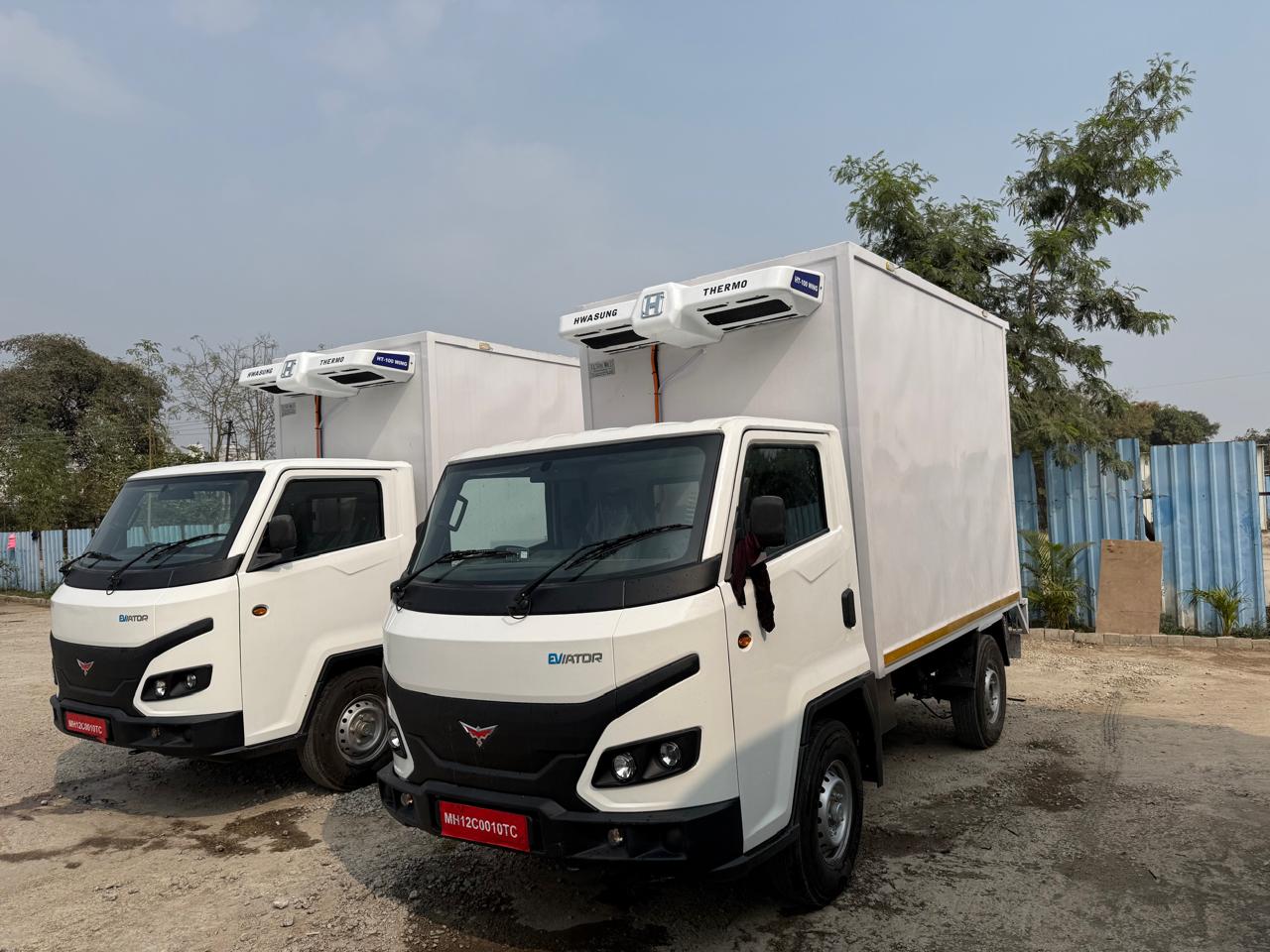
As India’s cold chain logistics sector continues to adopt electric mobility, Trans ACNR and Hwasung Thermo offer the HT‑100‑II Wing Series, an electric transport refrigeration unit designed for small battery electric refrigerated transport vehicles.
INTRODUCTION
Cold chain logistics requires maintaining defined temperature conditions for temperature‑sensitive goods from origin to destination. In last‑mile distribution, the refrigeration system installed on the delivery vehicle is one of the key components used to maintain these conditions.
Conventional transport refrigeration systems have often used an internal combustion engine (ICE) or a diesel‑driven arrangement for the refrigeration function. As fleet operators evaluate battery electric vehicles (BEVs) for urban distribution use cases, refrigeration solutions that operate using electric power are also evaluated for compatibility with BEV platforms.
The Hwasung Thermo HT‑100‑II Wing Series, distributed in India by Trans ACNR, is designed for use on small battery electric refrigerated transport vehicles and for integration with vehicle electrical architectures used in this category.
ELECTRIC REFRIGERATION IN LAST‑MILE LOGISTICS
Urban distribution requirements for fresh food, pharmaceuticals and e‑commerce have increased the use of small light commercial vehicles for multi‑stop deliveries, including refrigerated applications.
In parallel, regulatory requirements and policy measures relating to vehicle emissions and electric mobility have contributed to increased adoption and evaluation of electric vehicles for urban logistics operations. In refrigerated transport, the overall vehicle configuration (including the refrigeration system’s power source) is one of the factors fleet operators consider when assessing operational requirements such as payload, range planning and refuelling/charging arrangements.
The HT‑100‑II Wing Series is designed to operate using electric power, enabling refrigerated operation without a dedicated diesel engine for the refrigeration function.
DESIGNED FOR ELECTRIC VEHICLES
Transport refrigeration units used on electric vehicles may be either adapted from conventional systems or engineered for electric platforms. The HT‑100‑II Wing Series is designed for battery electric refrigerated vehicle applications.
- Operational voltage: The unit operates on DC 12V, compatible with auxiliary power architectures commonly used in small battery electric light commercial vehicles.
- Standby operation: For stationary operation (for example, at loading bays or during holding), the unit supports DC 350V or DC 650V input. When operating on 350V DC, the unit is specified to deliver 1.2 kW at 3.5 A.
- Condenser design: The nose‑mounted condenser uses a Wing profile, intended to reduce frontal aerodynamic resistance relative to bulkier profiles, which may be relevant to vehicle operation planning.
THERMAL PERFORMANCE PARAMETERS
Last‑mile refrigerated distribution may involve high ambient temperatures and frequent door openings during multi‑stop routes. For this reason, equipment performance is typically assessed against defined test conditions.
The HT‑100‑II Wing Series has been tested at 35°C ambient temperature under ATP Standard conditions. Using R‑404A refrigerant with a charge weight of 1.5 kg, the unit is specified with the following cooling capacities:
- At 0°C cargo space temperature: 2,189 kcal/h (2,841 W)
- At –10°C cargo space temperature: 1,719 kcal/h (2,144 W)
- At –20°C cargo space temperature: 999 kcal/h (1,454 W)
These parameters cover chilled and frozen temperature ranges typically used for applications such as dairy, produce, pharmaceuticals (as applicable to the shipper’s requirements) and frozen goods.
The unit is specified for cargo compartments supporting:
- Frozen payload volume: up to 13 m³
- Fresh cargo volume: up to 22 m³
Application suitability should be assessed based on vehicle body design, insulation, loading patterns and operating conditions.
COMPRESSOR AND AIRFLOW
The HT‑100‑II Wing Series employs a scroll‑type electric compressor with a displacement of 34 cc. Scroll compressors are used in transport refrigeration applications for their operating characteristics, including smooth operation and efficiency attributes.
- Airflow (0 static pressure): 1,300 m³/h
Airflow specification and evaporator placement are relevant factors for temperature distribution within the cargo compartment and for pull‑down performance following loading, depending on operating conditions and cargo arrangement.
PHYSICAL INTEGRATION AND WEIGHT
For small light commercial vehicles, refrigeration unit dimensions and weight influence integration feasibility and payload planning.
Specified dimensions and weights:
- Condenser unit: 1,420 mm × 490 mm × 270 mm, 30 kg
- Evaporator unit: 1,040 mm × 669 mm × 168 mm, 24 kg
- Cab controller: 95 mm × 55 mm × 10 mm
The evaporator height of 168 mm is intended to reduce intrusion into usable cargo space. The cab controller provides microprocessor‑based temperature monitoring and control.
APPLICATIONS
The HT‑100‑II Wing Series is intended for applications where temperature control is required during transport. Typical use cases may include:
Food and Beverage Distribution
Fresh produce, dairy, meat, seafood and packaged foods may require defined transport temperatures. Operators may also maintain records and temperature logs based on customer and regulatory requirements. The unit’s temperature monitoring and control functions can be used as part of such operational processes.
Pharmaceutical and Healthcare Logistics
Temperature‑sensitive medical supplies may require temperature maintenance within specific ranges (as determined by the shipper and applicable distribution protocols). Temperature monitoring is commonly used for documentation in pharmaceutical logistics processes.
E‑Commerce and Last‑Mile Delivery
Urban delivery routes may involve frequent stops and repeated door opening events. Unit selection and operating settings are typically determined based on route patterns, cargo type, ambient conditions and vehicle body insulation.
OPERATING CONDITIONS AND SELECTION PARAMETERS
The HT‑100‑II Wing Series is designed for electric operation in refrigerated transport applications. Selection conditions are specified at:
- Maximum ambient temperature: 30°C
- Cargo compartment insulation K‑values:
- 0.35 W/m²K at –20°C
- 0.5 W/m²K at +6°C
Where operating conditions differ (for example, high altitude, extreme ambient temperatures or non‑standard insulation values), unit selection should be evaluated based on the specific vehicle body configuration and duty cycle. Consultation with a technical team prior to selection can assist in confirming application suitability.
TRANS ACNR AND HWASUNG THERMO – DISTRIBUTION AND SUPPORT
The HT‑100‑II Wing Series is available in India through Trans ACNR Solutions Private Limited, the authorised distribution and after‑sales service partner for Hwasung Thermo refrigeration units in the Indian market.
Trans ACNR has experience in transport thermal management across bus air conditioning, railway HVAC, defence HVAC, battery thermal management systems and transport refrigeration. The company has a DSIR‑recognised Research and Development Centre equipped with an Advanced Psychrometric Laboratory, and maintains quality management system certifications including ISO 9001:2015, IATF 16949:2016, ISO 14001:2015, and OHSAS 18001:2007 (as applicable).
Trans ACNR maintains service infrastructure across Delhi, Bangalore, Chennai, Pune, Chandigarh, Kochi, Ranchi, Hyderabad, Jaipur, Mumbai, Ahmedabad, Karur and Coimbatore to support installation and after‑sales requirements.
CONCLUSION
The Hwasung Thermo HT‑100‑II Wing Series is an electric transport refrigeration unit designed for small battery electric refrigerated light commercial vehicles. The unit specifications include defined voltage inputs, cooling capacity parameters under stated test conditions, and physical dimensions intended for integration in this vehicle category.
Vehicle manufacturers, body builders and fleet operators should evaluate suitability based on cargo type, required temperature band, insulation, ambient conditions and duty cycle. For technical information, specification support or service location details, please refer to the contact information below.
To learn more / request technical information:
Contact info@transacnr.com.
Trans ACNR Solutions Private Limited, 28/15, Rajokri Road, Samalka, New Delhi – 110 037, India,
T: +91 82871 11376
FAQ
: What vehicles is the HT‑100‑II Wing Series designed for?
A: It is designed for small battery electric refrigerated light commercial vehicles (LCVs). Vehicle suitability depends on electrical architecture, cargo body dimensions, insulation and duty cycle, and should be evaluated for each application.
Q: What is the operating voltage?
A: The unit is specified for DC 12V operation and supports standby input at DC 350V or DC 650V.
Q: What test conditions are referenced in the cooling capacity figures?
A: The cooling capacities are stated under ATP Standard conditions at 35°C ambient temperature using R‑404A refrigerant with a 1.5 kg charge.
Q: What are the specified cooling capacities at different setpoints?
A: 2,189 kcal/h at 0°C, 1,719 kcal/h at –10°C, and 999 kcal/h at –20°C.
Q: Where is the product available in India?
A: The unit is distributed in India by Trans ACNR Solutions Private Limited through its authorised network.