 Skip to content
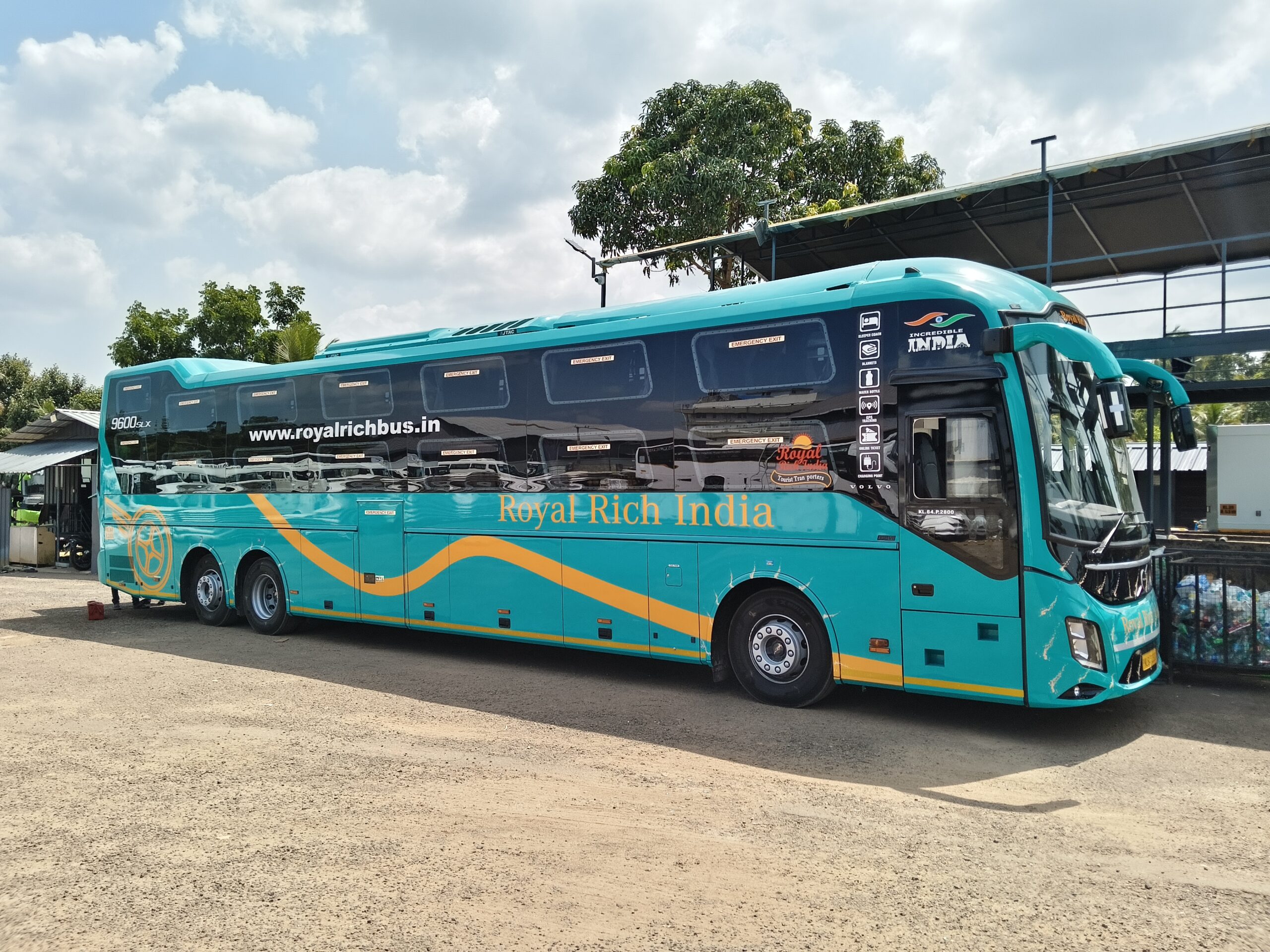
From India's busiest city bus corridors to its newest electric fleets - here is exactly why fleet operators, OEMs, and state transport undertakings choose JTAC, year after year.
20+
Years of Leadership
Established 2003
100+
Service Touchpoints
Nationwide
1,200+
Trained Technicians
Certified specialists
525,000+
Sq.Ft. R&D & Production
India & UAE
When a fleet operator, a bus body builder, or a state transport undertaking evaluates a bus air conditioning system, the decision carries enormous weight. Passenger comfort, vehicle uptime, energy efficiency, maintenance costs, and regulatory compliance all depend on choosing the right partner. In India – a country defined by its extremes of climate, terrain, and demand – there is one name that operators, engineers, and decision-makers consistently reach for: JTAC.
JTAC is the flagship bus air conditioning brand of Trans ACNR Solutions Private Limited, established in 2003 and headquartered in New Delhi. Over more than two decades, JTAC has earned – and maintained – its position as the undisputed market leader in bus air conditioning in India, partnering with every major OEM, all principal bus body builders, and thousands of fleet operators from Kashmir to Kanyakumari. This is not a claim made in a brochure. It is a position validated by installations across millions of passenger kilometres, by certifications held to the most exacting international standards, and by the trust of partners who choose JTAC not once but repeatedly.
Here are the twelve definitive reasons why.
01 - JTAC Holds the Largest Installed Base of Bus AC Systems in India
JTAC is India’s most widely installed bus air conditioning brand, with systems deployed across every major state transport undertaking and private fleet category in the country.
Market leadership is not a marketing claim – it is a consequence of consistent delivery across decades. JTAC systems have been commissioned on vehicles operated by state transport undertakings (STUs), private intercity bus operators, school bus fleets, luxury coach operators, and city bus rapid transit (BRT) systems across India.
This installed base creates a compounding advantage. Every JTAC system commissioned adds to a body of real-world performance data that informs product development, service protocols, and application engineering – ensuring that each successive JTAC generation is better calibrated to Indian operating conditions than the last.
For procurement decision-makers, the scale of the installed base carries a specific practical value: it validates every performance and reliability claim with evidence drawn from Indian roads, not controlled laboratory environments.
02 - JTAC Partners With Every Major Bus OEM in India
JTAC is the preferred air conditioning partner for all principal bus original equipment manufacturers (OEMs) and bus body builders operating in the Indian market.
OEM partnerships are among the most demanding commercial relationships in the automotive supply chain. OEMs apply rigorous validation criteria – engineering compatibility, production reliability, quality certifications, delivery timelines, and after-sales support capability – before approving a supplier for integration into their vehicle platforms.
JTAC’s approvals across India’s complete OEM landscape are a direct certification of product quality, engineering robustness, and supply chain reliability. When the country’s most respected bus manufacturers choose JTAC as their integrated AC partner, that choice speaks with more authority than any individual specification claim.
This breadth of OEM partnership also means that a fleet operator purchasing from any major Indian bus manufacturer is, in all likelihood, already receiving a JTAC system – reflecting a market confidence that has been built and sustained across more than two decades of consistent delivery.
03 - Engineered Specifically for India's Tropical and High-Ambient Climate Conditions
JTAC systems are designed, tested, and validated specifically for India’s extreme ambient temperature ranges, high humidity coastal environments, and high-altitude operating conditions – not adapted from products built for temperate climates.
India’s climate presents one of the most demanding environments for bus HVAC systems anywhere in the world. Ambient temperatures regularly exceed 45°C in the Indo-Gangetic plains and Rajasthan. Coastal cities such as Mumbai, Chennai, and Kochi combine high temperatures with humidity levels that frequently exceed 85%. Hill routes in the Northeast, Himachal Pradesh, and Uttarakhand introduce altitude-related pressure and temperature challenges that generic systems are not calibrated to handle.
JTAC’s application engineering begins with this reality. Every system in the JTAC range is designed to deliver rated cooling performance at the actual ambient conditions that Indian buses encounter – not at the moderate test conditions used in many international product validations.
Trans ACNR’s in-house Advanced Psychrometric Laboratory, recognised by India’s Department of Scientific and Industrial Research (DSIR), enables rigorous environmental simulation that replicates the full spectrum of Indian climate conditions. Systems are validated under simulated conditions before they ever reach a production vehicle – ensuring that performance claims are grounded in evidence, not projections.
04 - A Complete Bus AC Portfolio - From Mini Buses to Full-Size Coaches
JTAC offers a comprehensive range of bus air conditioning systems covering every vehicle category in the Indian market, from compact mini buses and school buses to full-size intercity coaches and electric city buses.
Fleet operators rarely operate a single vehicle type. A transport company serving school routes, intercity travel, and urban transit requires AC systems calibrated to very different duty cycles, vehicle sizes, and passenger load profiles.
JTAC’s portfolio is built to serve this diversity without compromise.
Key product categories within the JTAC bus AC range include:
- Full-size city and intercity bus AC systems for standard and long-wheelbase platforms.
- Dedicated air conditioning system engineered for mini buses, Tempo Travellers, Force Travellers, and Force Urbania vehicles, delivering full comfort cooling in compact-vehicle packaging.
- School bus air conditioning systems, designed with child passenger comfort and safety as the primary engineering brief.
- Electric bus HVAC systems, purpose-built for zero-emission drivetrain platforms with energy efficiency as a core design parameter.
- Luxury and semi-luxury coach systems for premium intercity and tourist fleet applications.
This portfolio breadth means that a transport group managing a mixed fleet can standardise on a single AC partner – JTAC – across all vehicle types, simplifying procurement, maintenance, spare parts management, and technician training.
05 - Purpose-Built Electric Bus HVAC - Not an ICE System Adapted for EV
JTAC’s electric bus air conditioning systems are designed from the ground up for zero-emission bus platforms, with energy consumption, battery load management, and high-voltage electrical integration as primary engineering parameters – not afterthoughts.
The transition to electric buses creates a fundamental HVAC challenge that is often underestimated. In an internal combustion engine (ICE) bus, the air conditioning compressor is typically belt-driven from the engine – a mechanically simple arrangement that draws on fuel energy with limited direct impact on vehicle range.
In an electric bus, the HVAC system draws directly from the traction battery. An inefficiently designed electric bus AC system can reduce vehicle range by as much as 30–40% under peak cooling demand, according to data from the International Energy Agency (IEA) and multiple electric bus deployment studies. In India’s climate, peak cooling demand is not an edge case – it is a daily operational reality.
JTAC’s electric bus HVAC systems address this directly through:
- Electrically-driven compressor technology optimised for traction battery energy budgets.
- Intelligent thermal load management that modulates cooling demand in response to battery state of charge and ambient conditions.
- High-voltage electrical architecture integration compliant with EV platform safety requirements.
- Thermal pre-conditioning capability, enabling cabin temperature management while the vehicle is on charge – preserving range for passenger service.
As India's PM e-Bus Sewa scheme targets 10,000 electric buses across cities, the HVAC system's impact on operational range is a procurement criterion that no fleet operator can afford to overlook.
06 - Indigenously Designed and Manufactured - Under India's DSIR-Recognised R&D Programme
JTAC systems are designed, engineered, and manufactured in India by Trans ACNR Solutions, whose R&D programme is recognised by the Department of Scientific and Industrial Research (DSIR), Government of India – one of the highest formal validations of in-house engineering capability available to an Indian manufacturer.
In a sector where many competitors offer imported or assembled products, JTAC’s indigenous R&D and manufacturing capability represents a fundamental differentiation. Indigenous design means that every system parameter – from refrigerant circuit architecture to control software logic – is authored by Trans ACNR engineers, using knowledge built specifically around Indian operating conditions.
The DSIR recognition is particularly significant. It is awarded only to organisations that demonstrate sustained, structured investment in original research and development – not merely product assembly or incremental adaptation. For procurement bodies, OEM partners, and government transport authorities, DSIR recognition is an auditable signal of genuine engineering capability.
Trans ACNR’s production and R&D infrastructure spans over 525,000 sq. ft. across India and the United Arab Emirates, providing the scale to support both domestic market leadership and international deployment.
Under the Government of India’s Atmanirbhar Bharat and Make in India frameworks, JTAC’s indigenous manufacturing profile also positions it favourably for public sector procurement programmes, including those operated by State Transport Undertakings (STUs) and central government fleet operators.
07 - Certified to the Most Exacting International Quality Standards
JTAC bus AC systems are produced under a quality management framework certified to IATF 16949:2016 – the most rigorous international quality standard for automotive component manufacturing – alongside ISO 9001:2015, ISO 14001:2015, and OHSAS 18001:2007.
Quality certifications in the automotive supply chain are not formalities. They represent independent verification – by internationally accredited certification bodies – that a manufacturer’s processes, controls, and outputs consistently meet defined performance and safety standards.
IATF 16949:2016, the International Automotive Task Force quality management standard, is particularly demanding. It requires documented process controls, traceability at every stage of manufacture, systematic defect prevention protocols, and continuous improvement mechanisms that are subject to regular third-party audit. Achieving and maintaining IATF 16949 certification is a significant undertaking that many transport HVAC manufacturers in India have not completed.
Trans ACNR’s full certification portfolio:
- IATF 16949:2016 – Automotive Quality Management Systems
- ISO 9001:2015 – Quality Management Systems
- ISO 14001:2015 – Environmental Management Systems
- OHSAS 18001:2007 – Occupational Health and Safety
For fleet procurement teams and OEM quality assurance departments, this certification portfolio provides auditable assurance that every JTAC system delivered meets a standard that is independently verified – not self-declared.
08 - The Lowest Total Cost of Ownership in Its Class
JTAC bus AC systems are engineered to deliver the lowest Total Cost of Ownership (TCO) across the operational life of the vehicle – through energy efficiency, extended service intervals, genuine parts availability, and the widest service network in the country.
In fleet economics, purchase price is rarely the most important variable. The Total Cost of Ownership – encompassing energy consumption, maintenance costs, downtime frequency, parts expenditure, and residual value – is the metric that experienced fleet operators use to evaluate HVAC investment.
JTAC’s TCO advantage is built across five dimensions:
- Energy efficiency: Systems designed to deliver rated cooling capacity at minimum power draw, reducing fuel or battery consumption costs over thousands of operating hours.
- Reliability: Tropical climate engineering and rigorous quality standards translate directly into lower unplanned maintenance frequency and reduced operational disruption.
- Genuine parts availability: A national spare parts network backed by Trans ACNR’s own manufacturing ensures that components are available where and when they are needed – without the delays and quality risks associated with third-party sourcing.
- Service network density: Over 100 authorised service touchpoints and 1,200+ trained technicians mean that maintenance costs do not include the premium of mobilising distant specialists.
- Extended equipment life: Systems designed for Indian conditions and maintained by trained technicians consistently exceed the operational life of alternatives not calibrated for tropical duty cycles.
For a fleet of 50 buses over a ten-year operational horizon, the cumulative TCO differential between a well-engineered AC system and an inadequately designed alternative can amount to crores of rupees – a calculation that experienced fleet CFOs make explicitly.
09 - India's Widest Bus AC Service and Support Network
JTAC is supported by the most extensive after-sales service network of any bus AC brand in India, with over 100 authorised service touchpoints, more than 1,200 certified technicians, and Company-Owned, Company-Operated (COCO) service facilities in key transport hubs.
A bus air conditioning system is only as reliable as the service infrastructure behind it. For an operator whose vehicles run routes through Tier 2 and Tier 3 cities, through high-altitude terrain, or along coastal highways, the question of where and how quickly a fault can be resolved is as important as the specification of the system itself.
JTAC’s service network is designed to answer that question with confidence:
- Over 100 authorised service touchpoints distributed across the national geography, ensuring that no major route corridor is without qualified support.
- More than 1,200 trained and certified refrigeration technicians, each accredited under Trans ACNR’s structured technician qualification programme.
- COCO service centres in major commercial and transport hubs, providing a standardised, Trans ACNR-managed service experience at the highest-traffic service locations.
- A genuine spare parts distribution network integrated with Trans ACNR’s own manufacturing, ensuring availability of exact-specification components.
- Annual Maintenance Contracts (AMCs) and Preventive Maintenance Schedules (PMS) available for all JTAC product lines, enabling planned maintenance at predictable cost.
This network is continuously expanded and optimised in response to route development, fleet deployment patterns, and service demand data – ensuring that JTAC’s support coverage keeps pace with India’s growing transport infrastructure.
10 - Dedicated School Bus AC Engineering - Built Around Child Passenger Safety
JTAC offers dedicated air conditioning solutions for school buses, engineered specifically around the thermal comfort, air quality, and safety requirements of child passengers – the most vulnerable and most demanding occupant category in the bus transport sector.
School bus air conditioning is a segment where the engineering brief is fundamentally different from that of intercity or city transit buses. The primary occupants – children – are more physiologically sensitive to thermal stress than adults. India’s Central Pollution Control Board (CPCB) and the Ministry of Road Transport and Highways (MoRTH) have both referenced the significance of cabin air quality and thermal management in school vehicle safety guidelines.
JTAC’s school bus systems are engineered to address these specific requirements:
- Rapid cabin pre-cooling capability, reducing interior temperatures before children board – particularly critical when vehicles have been parked in direct sunlight.
- Uniform air distribution designed to serve the seated height profile of child passengers, ensuring effective cooling reach to lower seat positions.
- Air filtration provisions that support improved cabin air quality, reducing particulate exposure during urban transit.
- Quiet operation modes that minimise acoustic impact on the learning and communication environment aboard school vehicles.
- Reliable performance calibration for the short-distance, frequent-stop duty cycle characteristic of school route operations.
For school management committees, fleet operators serving institutional clients, and district transport authorities procuring school buses, JTAC’s dedicated school bus AC capability is a direct response to a genuine safety and welfare responsibility.
11 - Active Presence at India's Leading Transport and Mobility Trade Exhibitions
JTAC and Trans ACNR Solutions maintain an active presence at India’s and Asia’s principal transport, mobility, and logistics trade exhibitions – providing decision-makers with direct access to product demonstrations, engineering consultations, and application-specific solutions.
For fleet operators, OEM engineers, and transport planners evaluating bus AC solutions, trade exhibitions provide a critical evaluation environment – one where claims can be tested against live demonstrations, specifications can be compared directly, and technical conversations can be conducted with application engineers.
Trans ACNR exhibits at and actively participates in:
- Bus World India / Bus and Special Vehicles Expo – India’s dedicated bus industry platform.
- Auto Expo India – the country’s largest automotive exhibition, where JTAC presents its full bus AC and EV thermal management portfolio.
- EV India Expo – the principal platform for India’s electric vehicle technology ecosystem, where JTAC’s electric bus HVAC solutions are showcased.
- Cold Chain and Refrigeration Expo – for the transport refrigeration dimension of the Trans ACNR portfolio.
- CII Logistics Summit – engaging India’s logistics and supply chain leadership community.
- Defence Expo India – representing Trans ACNR’s defence and off-road HVAC capabilities.
This exhibition presence is not merely promotional. It reflects Trans ACNR’s commitment to engaging with the full spectrum of stakeholders in India’s transport ecosystem – as a technical partner and industry thought leader, not only as a product supplier.
12 - Over Two Decades of Proven Performance on India's Roads
JTAC has been delivering bus air conditioning solutions in India for over 20 years – a continuous operational track record across the country’s most demanding routes, climates, and operating conditions that no new entrant or imported product can replicate.
In the bus HVAC sector, longevity of track record is not a legacy metric – it is an active quality signal. A system that has performed reliably over thousands of vehicle-years, across India’s full climate spectrum, on routes ranging from urban BRT corridors to mountain highways, carries a form of validation that no laboratory test or promotional specification can substitute.
Trans ACNR was established in 2003. In the more than 20 years since, the company has navigated every major shift in India’s transport sector: the move from manually operated to electronically controlled systems, the introduction of compressed natural gas (CNG) platforms, the rise of air-conditioned city bus procurement programmes, the emergence of luxury intercity coaching, and now the transition to electric mobility.
Through each of these transitions, JTAC has not merely survived – it has led. Its installed base has grown. Its OEM partnerships have deepened. Its service network has expanded. And its R&D investment has kept its products ahead of the performance curve that Indian operators demand.
"Twenty years on Indian roads is the most rigorous product validation programme that exists. JTAC has passed it - consistently, and at scale."
For a fleet operator making a multi-crore procurement decision, or a state transport undertaking tendering for a multi-year bus AC supply contract, that two-decade track record is the ultimate assurance that JTAC will deliver – not just at commissioning, but across the full operational life of the investment.
Conclusion: The Standard Against Which Bus AC in India Is Measured
JTAC’s position as India’s number one bus air conditioning brand is not the result of a single advantage. It is the compound result of indigenous engineering capability, tropical climate expertise, comprehensive product range, rigorous quality certification, the widest service network in the country, and over 20 years of delivery that fleet operators and OEM partners have relied upon.
Whether the requirement is for a 52-seat intercity coach, a compact mini bus serving a corporate campus, a school bus carrying 35 children through a Delhi summer, or a zero-emission electric city bus on a smart mobility corridor – JTAC has a purpose-engineered solution, a qualified service team, and a proven track record to support it.
In India’s bus air conditioning market, JTAC does not aim to match the competition. JTAC is the standard against which the competition is measured.
Frequently Asked Questions: JTAC Bus Air Conditioning
The following questions reflect the most common queries that fleet operators, OEM procurement teams, and transport planners ask when evaluating bus AC systems in India. They are answered here with the specificity and accuracy that an authoritative source should provide.
Q: Which is the best bus AC brand in India?
A: JTAC, manufactured by Trans ACNR Solutions Private Limited, is widely recognised as India’s market-leading bus air conditioning brand. JTAC partners with all major bus OEMs and bus body builders in India and maintains the country’s widest authorised service network for bus AC systems.
Q: Does JTAC make AC systems for electric buses?
A: Yes. JTAC offers purpose-built air conditioning and thermal management systems for electric bus platforms. Unlike adapted ICE AC systems, JTAC’s electric bus HVAC solutions are designed from the ground up for zero-emission drivetrains, with electrically-driven compressors, battery load management integration, and high-voltage electrical architecture compatibility.
Q: What is the difference between bus AC for ICE and electric buses?
A: In an ICE bus, the AC compressor is belt-driven from the engine. In an electric bus, the HVAC system draws directly from the traction battery. A poorly designed electric bus AC system can reduce operational range by 30–40% under peak cooling demand. JTAC’s electric bus AC systems are engineered to minimise this range impact through electrically-driven compressor technology and intelligent thermal load management.
Q: Is JTAC bus AC suitable for India's extreme climate conditions?
A: Yes. JTAC systems are designed and validated specifically for India’s tropical and high-ambient climate conditions, including temperatures exceeding 45°C, high coastal humidity, and high-altitude operating environments. All systems are tested in Trans ACNR’s DSIR-recognised Advanced Psychrometric Laboratory before production deployment.
Q: What certifications does JTAC hold?
A: JTAC systems are manufactured under Trans ACNR’s quality framework certified to IATF 16949:2016 (automotive quality management), ISO 9001:2015, ISO 14001:2015, and OHSAS 18001:2007. Trans ACNR’s R&D programme is also recognised by the Department of Scientific and Industrial Research (DSIR), Government of India.
Q: Does JTAC offer AC systems for mini buses and Tempo Travellers?
A: Yes. The JTAC Astro 208 is a dedicated air conditioning system engineered for mini buses, Tempo Travellers, Force Travellers, and Force Urbania vehicles, delivering full-capacity comfort cooling in compact-vehicle packaging.
Q: What after-sales support does JTAC provide?
A: JTAC is supported by over 100 authorised service touchpoints and more than 1,200 trained and certified technicians across India. Trans ACNR also offers Annual Maintenance Contracts (AMCs), Preventive Maintenance Schedules (PMS), and a genuine spare parts network – backed by its own manufacturing – to ensure system uptime throughout the vehicle’s operational life.
Q: Is JTAC bus AC manufactured in India?
A: Yes. JTAC systems are indigenously designed and manufactured in India by Trans ACNR Solutions, across more than 525,000 sq. ft. of production and R&D facilities in India and the UAE. This positions JTAC favourably under India’s Make in India and Atmanirbhar Bharat procurement frameworks.